Transformation happens when we are truly seen, heard and validated
Life rarely unfolds the way we imagined it would.
Maybe you've spent years trying to understand yourself. You've read the books, listened to the podcasts, learned the coping skills—and yet something still feels stuck.
Perhaps trauma keeps showing up in ways you don't expect. Maybe your brain never seems to slow down. Maybe you're constantly analyzing conversations, questioning yourself, or wondering why life feels harder than it seems to for everyone else.
Maybe you've spent so long surviving that you've lost sight of who you are beneath the expectations, roles, and survival strategies you've carried along the way.
Like every epic journey, healing isn't a straight path. There are swamps of sadness to cross, dark forests of uncertainty to navigate, dragons we never asked to fight, and mirrors that reflect truths we'd sometimes rather avoid. But you don't have to navigate them alone. You don't need to become someone else to begin.
You already belong.
Your Story Isn't the Problem. It's the Map.
Every child is handed a map before they're old enough to know they didn't draw it. Family. Relationships. Culture. Expectations. Identity. Love. Loss. Trauma. The ways we were seen—and the ways we weren't. Piece by piece, those experiences teach us how to navigate the world. They teach us what feels safe. What earns connection. What invites rejection. When to speak. When to disappear. When to fight. When to take care of everyone else. And sometimes, simply how to survive.
Those strategies can follow us long after the circumstances that created them have changed. That's why I don't begin with:
"What's wrong with you?"
I'm much more interested in: What happened that made this make sense?" Because behavior always makes sense once you understand the story that wrote it.
Therapy isn't about throwing away your map. It's about finally unfolding it. Understanding who helped draw it. Recognizing which paths helped you survive. And deciding which ones you still want to follow. Once you understand the map, **you get to choose your own direction.
Every Hero's Journey Has Guides Along the Way
Hi, I'm Colleen (she/her/hers).
I'm a neurodivergent, nerdy Licensed Marriage and Family Therapist (LMFT) and Licensed Mental Health Counselor (LMHC) with more than 16 years of experience helping adults heal from trauma, understand themselves more deeply, and reconnect with who they are beneath survival mode.
I'm also neurodivergent myself—which means many of my clients appreciate not having to explain what it's like when your brain works differently.
Sessions with me tend to be collaborative, conversational, curious, and practical. We'll probably laugh sometimes. We may also sit with painful memories, complicated relationships, uncomfortable emotions, and truths that are difficult to look at. Both can exist in the same room.
My role isn't to tell you who you are. It isn't to choose your destination or walk the journey for you. My role is to help you orient yourself. To understand your story. To recognize the patterns that once protected you. To process the experiences that continue to hold you back. And to help you see yourself clearly enough that you get to decide where you want to go next.
I don't believe people are problems to be solved. You're a story waiting to be understood.
Who Says You Have to Fit the Box?
Maybe you've spent your life trying to become who everyone else expected you to be. Maybe you've been told you're too much. Too sensitive. Too emotional. Too intense. Too quiet. Too loud. Too complicated. Or simply...different.
What if the problem isn't you?
What if you've been trying to fit into a box that was never designed with you in mind? The goal of therapy isn't to squeeze yourself into someone else's definition of "normal." In fact: Therapy isn't about finding a better box. It's about deciding whether you wanted to be in one to begin with. You don't have to earn belonging here. You don't have to become someone else before you're worthy of being understood.
You were never the problem. You were trying to survive with the map you were given. And you deserve the chance to understand who you've been all along.
If You're Reading This Thinking, "Yep...That's Me."
You might feel at home here if you:
Have experienced trauma, PTSD, complex PTSD, developmental trauma, or generational trauma.
Feel emotionally exhausted from constantly overthinking, analyzing, or trying to hold everything together.
Have spent much of your life masking, adapting, or wondering why you've never quite fit in.
Identify as ADHD, autistic, AuDHD, or are exploring whether you're neurodivergent.
Experience anxiety, depression, emotional dysregulation, burnout, or relationship-related stress.
Identify as LGBTQIA+ and want affirming therapy where your identity isn't treated as something requiring explanation.
Practice polyamory, ethical non-monogamy, or kink and want therapy free from judgment.
Struggle with boundaries, codependency, people-pleasing, perfectionism, or chronic self-doubt.
Have done "all the right things"—read the books, listened to the podcasts, learned the coping skills, maybe even tried therapy before—but something still isn't clicking.
Want therapy that's evidence-based without losing curiosity, humor, collaboration, or humanity.
You Shouldn't Have to Educate Your Therapist
Whether you're LGBTQIA+, neurodivergent, polyamorous, kinky, questioning your identity, or simply someone whose life has never fit neatly into traditional expectations, you deserve therapy where your identity isn't treated as a problem to solve.
Here, you don't have to translate your world before we can begin understanding your experience. You don't have to justify the way your brain works. You don't have to make your relationships look conventional. You don't have to shrink parts of yourself to make someone else more comfortable. You deserve to spend your therapy session exploring yourself—not explaining yourself.
The Tools We Carry
Every journey calls for different tools. Therapy does too. My work integrates evidence-based approaches including EMDR, DBT, trauma-focused psychotherapy, attachment and systems perspectives, psychoeducation, and practical strategies tailored to the person sitting across from me.
EMDR — Eye Movement Desensitization and Reprocessing
Process trauma instead of simply managing it. EMDR helps the brain reprocess distressing experiences so memories, beliefs, emotions, and body responses from the past don't continue to carry the same intensity in the present. EMDR can be particularly helpful for trauma and complex trauma, intrusive memories, negative self-beliefs, anxiety, hypervigilance, and experiences that you may understand intellectually but still seem to feel somewhere deeper.
DBT — Dialectical Behavior Therapy
Build practical tools for the life you're actually living.
DBT offers evidence-based strategies for emotional regulation, distress tolerance, mindfulness, boundaries, and relationships. These skills can be especially useful when emotions feel overwhelming, your nervous system seems permanently set to "too much," or understanding *why* something happens hasn't yet changed what happens next.
Trauma-Informed Therapy
Understand how your nervous system adapted to survive. Trauma-informed therapy doesn't begin by asking how to eliminate a symptom. We get curious about why it's there. The behaviors, beliefs, and responses that frustrate you today may have once been remarkably effective ways of protecting you. Understanding their purpose allows us to stop fighting ourselves and begin deciding what we still need.
Understanding Changes Everything
Transformation happens when we are truly seen, deeply heard, and discover that our story makes sense. I believe people always make more sense than they first appear. The story explains the behavior. And understanding the story allows something powerful to happen: We can replace judgment with curiosity. Shame with context. Confusion with understanding. And survival with choice.
Therapy isn't about handing you a new identity. It's about helping you recognize the person who was already there. The world has spent long enough telling you who you should be. Therapy is where you get to discover who you already are.
Every Epic Journey Changes Us. A journey is something that happens. A map is something we can understand. And a compass doesn't decide where you're supposed to go—it simply helps you find your bearings. That's how I see my role in therapy. I'm not the hero of your story. You are.
I'm another human walking alongside you, helping you understand the terrain, notice the paths you've traveled before, and orient yourself when the way forward isn't clear. Because you don't just deserve tools for managing symptoms. You deserve the chance to understand why those symptoms developed in the first place. You deserve to know that your story makes sense.
And once you understand the story, you have something you may not have had when the map was first handed to you:
Choice.
Every epic journey changes us. Therapy helps us understand why—and choose where the path leads next. Let's Begin Your Journey
You don't need to have everything figured out. You don't need the right words. You don't need to know exactly where you're going. You only need somewhere to begin.
If you're ready to understand your story with greater compassion, process what continues to keep you stuck, and discover what comes next, I'd be honored to walk alongside you.
Your story isn't the problem. It's the map. Bring your story.
We'll make sense of the map together.
Schedule a Consultation
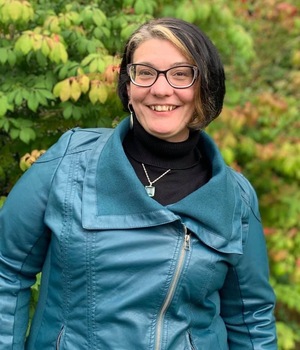
Colleen Short (She/Her)
MA, LMFT,LMHC